Register now and start:
- Accessing PAR Training
- Shopping PAR products & tools
- Using online assessments with PARiConnect


PARiConnect saves time, offers insightful reports, & exceptional reliability!


Whether you are assessing for a learning disability, compiling the right interventions for a student with emotional disturbance, trying to get your student qualified for special education, guiding a gifted teen, or helping a college-age student find the right major, our tailored and effective solutions are designed to support you.
Our comprehensive suite of psychological assessments and resources will provide the efficiency and effectiveness required in working with today’s student populations.
Our solutions enhance student success, offer customizable assessment tools, and provide training for school psychologists and other education-based mental health professionals.

Our PAR product solutions facilitate interventions, empowering you to make informed decisions and get your students the support they need.
We can develop a comprehensive suite of assessment instruments that will meet the needs of your particular school or institution.
We offer no-cost training on many of our instruments, which can be accessed by individuals, or seamlessly integrated into district-wide initiatives.
We understand that your time is valuable, and your resources are limited. PAR is here to help you extend your reach and make a difference within the constraints of the educational organization you work in.
As an expert in learning disabilities, teaching methods, and academic testing requirements, let PAR be your assessment partner to help you pinpoint learning and behavioral challenges. Our tests help you diagnose learning delays, develop interventions for your plans, and assist in monitoring progress.
Rely on PAR solutions and support resources such as:
Top Picks from PAR: Recommended Products Just for You »
Yours is a vital role in ensuring college freshmen not only acclimate to your university or college but also receive resources to set them up for success. PAR offers many tools that can be administered by most school leaders and easily added into your FYE curriculum.
Here are some ways that we support you:
Our tools can help you guide students to the right career based on their interests or uncover undiagnosed issues that can negatively impact their path to graduation.
Top Picks from PAR: Recommended Products Just for You »
It’s crucial to educate your students on the realities in the field of psychological assessment and give them a foundation they’ll use again and again in their careers. When they learn about and use valid, reliable, fully standardized instruments, they’ll enter the field with the knowledge they need to provide the highest standard of care to their own patients and conduct reliable, impactful research.
Implement PAR assessments instruments into your curriculum and receive these benefits:
Partner with PAR to elevate your curriculum, ensuring precision, compliance, and success in every project.
Top Picks from PAR: Recommended Products Just for Your Schools Programs»
Your high schoolers rely on you to support their efforts in selecting the right major, the right school, and the right career. While you may not have all the answers, PAR offers the Self-Directed Search. The SDS is a tool that allows your students to explore their options and get excited for what their future may hold, all based on their personality.
Here are some features of the SDS:
With tight budgets, staffing constraints and the growing number of students needing support services, look to the leader in scientifically valid assessment tools to obtain insight that will make a difference in determining what interventions students need to be successful.
Implement PAR assessment instruments into your district and receive these benefits:
Our team of assessment advisors are well-versed in the challenges your school district faces, with many of them having worked in school systems prior to joining PAR. We welcome a conversation on how to integrate PAR assessment tools into your district.
Top Picks from PAR: Recommended Products Just for Your Schools »
As you work with students with possible or diagnosed motoric or speech problems, selecting the best assessments to uncover the root cause of learning issues is important. PAR instruments help you diagnose learning delays, develop interventions for your plans, and assist in monitoring progress.
Rely on PAR solutions and support resources such as:
Working through the process to get your students with special needs the best educational support and services is your daily challenge. Integrating PAR assessments into your special ed program will provide important data to lay the foundation for IEPs. Our scientifically valid assessments can be an important part of supporting students across your entire district.
Let PAR assessments help you overcome some of your challenges:
Did you know that when you call our Customer Support team you never get routed through a phone tree? Speak to a live person within seconds of calling us!
Top Picks from PAR: Recommended Products Just for You »
Facing a new mandate to test for dyslexia? Starting a gifted program? Has a traumatic event impacted your students? Whatever challenges you’re facing, we can support you. PAR has many tools that can help you screen and measure your students for various learning and mental health challenges.
Receive benefits and support resources such as:
By integrating PAR's solutions, you can focus more on students and less on administrative tasks.
Top Picks from PAR: Recommended Products Just for You »
PAR is an approved application partner with Clever—the leading platform for secure digital learning in K–12 education. Our single sign on (SSO) experience from within Clever connects seamlessly to PARiConnect, making it that much easier for school districts looking to bring PAR’s trusted assessment solutions into their schools.
Interested in integrating your Clever experience with PAR? Visit our Clever page to submit the form and an assessment professional will be in touch.

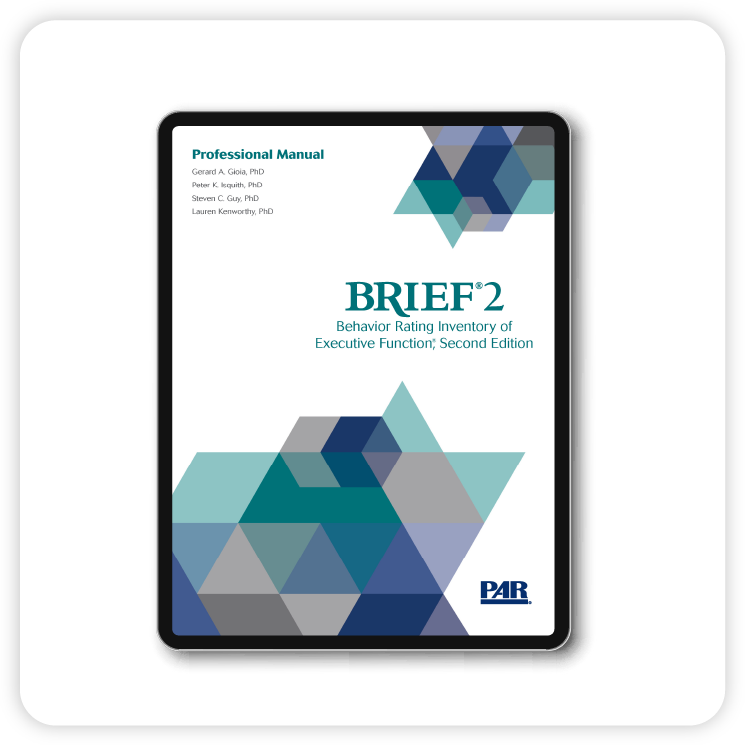
The Behavior Rating Inventory of Executive Function, Second Edition, is a proven measure of executive functioning across the life span including the BRIEF-P for preschool age students and the BRIEF2A for students transitioning out of high school. Use it as part of your battery with students with suspected self-regulation concerns such as autism, ADHD, and learning disabilities.
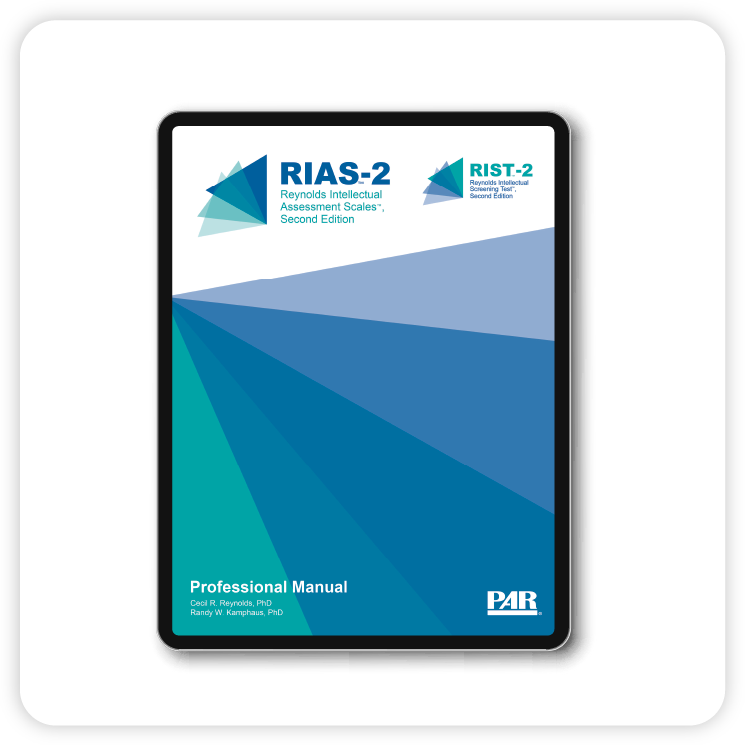
The Reynolds Intellectual Assessment Scales, Second Edition, is a reliable and valid measurement of g including verbal and nonverbal processing speed. Use it as a stand-alone intellectual assessment or as part of a larger battery to help diagnose intellectual or learning disabilities, and as a way to determine educational placement. Administer digitally or on paper.
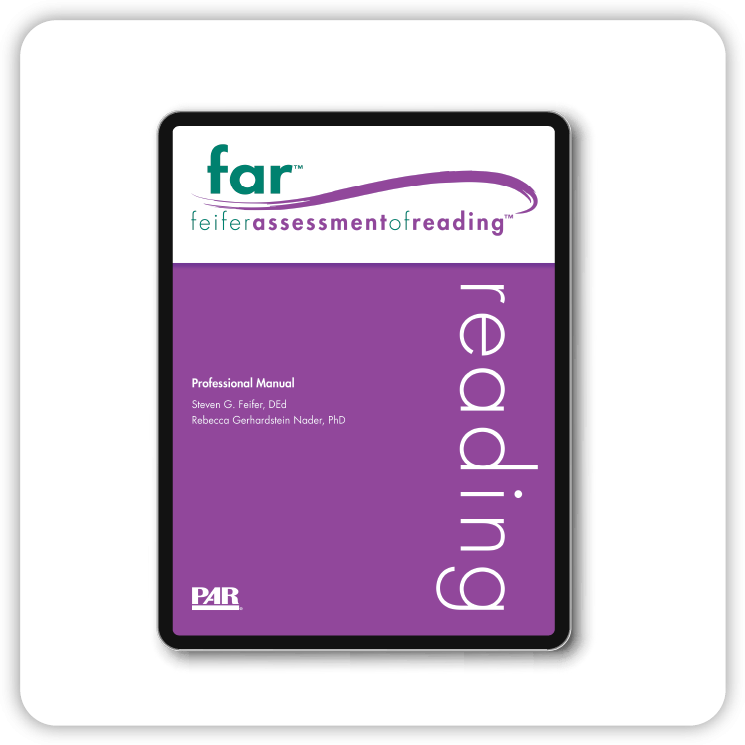
The Feifer Assessment of Reading doesn’t just indicate IF a student may have a reading disorder—it goes deeper to tell you WHY the student is struggling—identifying likely dyslexic subtypes. The FAR can measure for dysphonetic dyslexia, surface dyslexia, mixed dyslexia, and reading comprehension deficits, informing decisions about appropriate interventions.
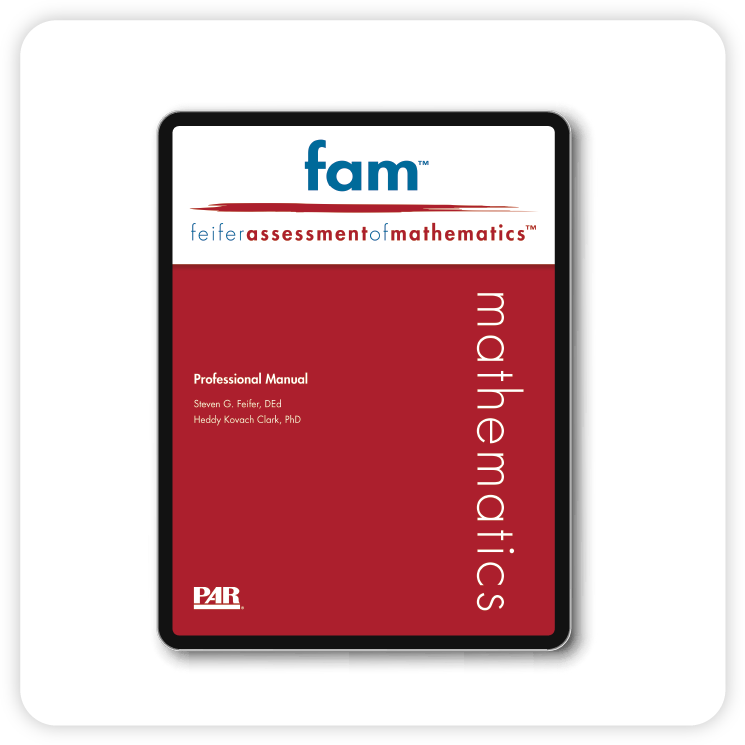
The Feifer Assessment of Mathematics has advantages over traditional academic tests because you learn WHY the student is where they are, without having to administer multiple tests to find out. The FAM can identify the specific type of dyscalculia, whether it is verbal, procedural, or semantic. Plus, you receive targeted interventions that can be used to build an IEP.
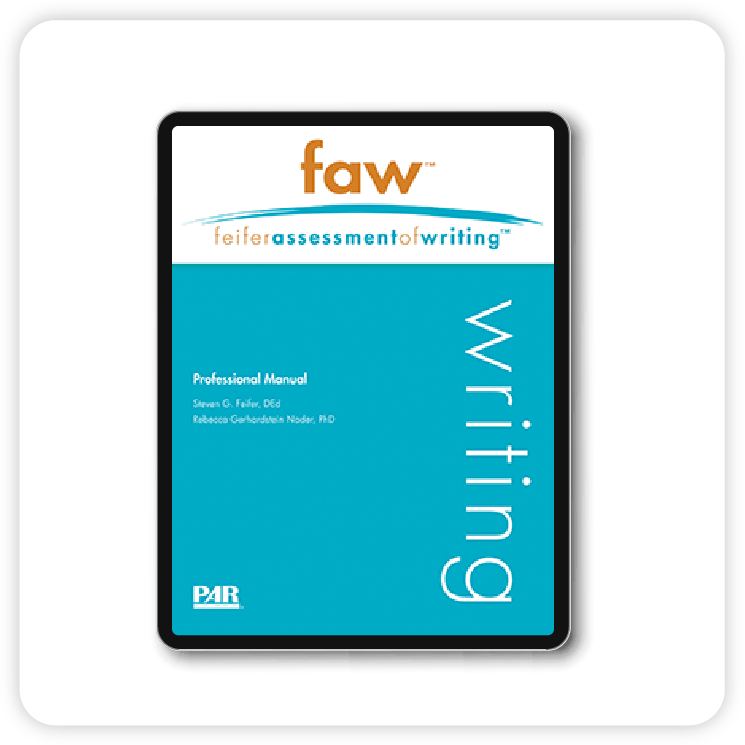
Is it a cognitive, linguistic, or motoric issue affecting a student's writing skills? Find out with the Feifer Assessment of Writing, a diagnostic achievement test designed to examine the underlying processes that support proficient written language skills. The FAW can identify the possibility of dysgraphia, and determine the specific subtype (graphomotor, executive, and dyslexic).
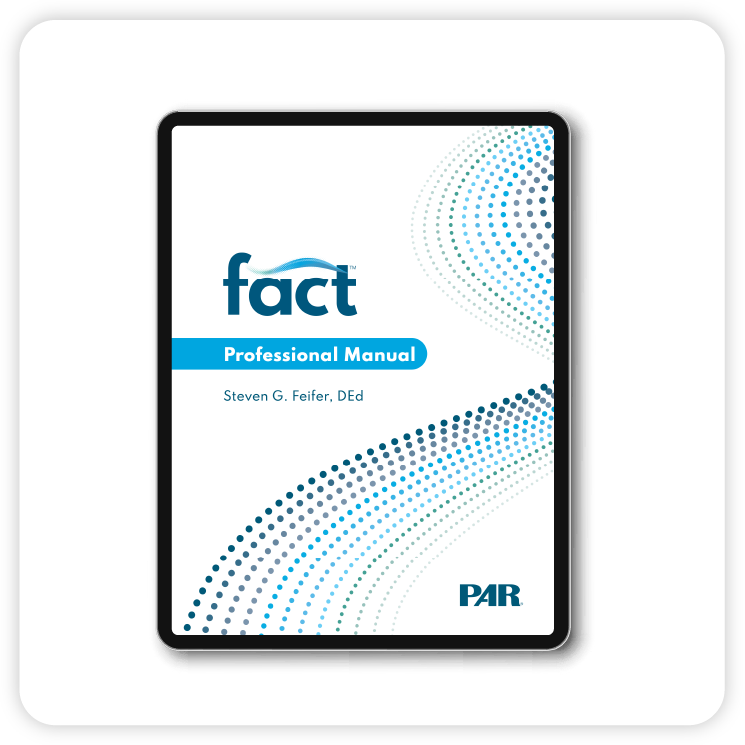
The Feifer Assessment of Childhood Trauma is the only instrument measuring how stress and trauma impact academic, behavioral, emotional, and physiological functioning in school-based settings. The FACT provides recommendations to help with IEP and 504 plans. Use to screen children within a multi-tiered system of support (MTSS) delivery model.

The Emotional Disturbance Decision Tree makes it easier to determine if your student meets federal criteria to qualify for special education services because it maps directly to IDEA criteria. By assessing from the teacher, parent, and student perspectives, it addresses the broad emotional and behavioral nuances of children who may require special education services for emotional disturbance.
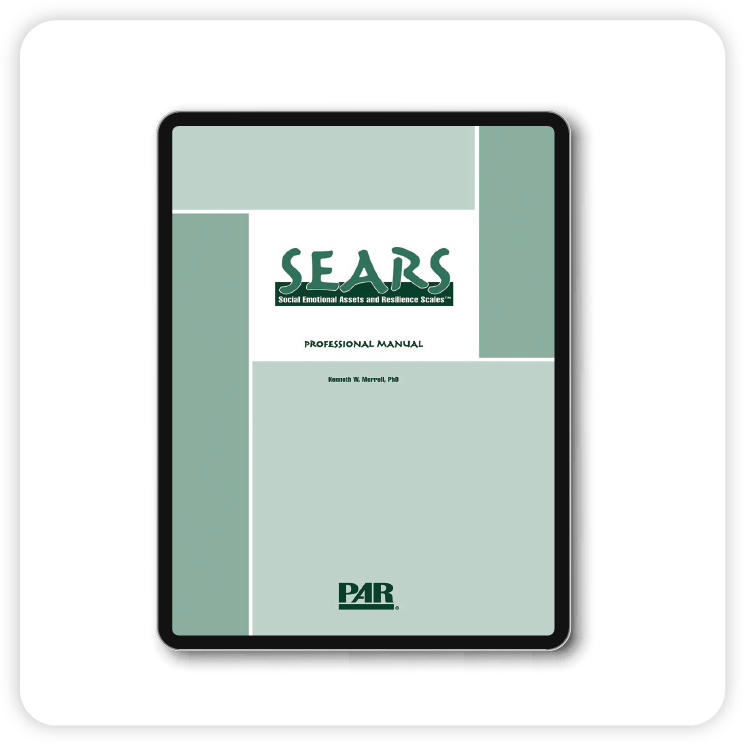
The Social Emotional Assets and Resilience Scales is a strengths-based tool that measures social–emotional assets in children and adolescents. Focusing on a child's strengths, it can be used with children and adolescents who exhibit a variety of clinical problems or who are at high risk for developing such problems. Includes separate child, adolescent, parent, and teacher forms.

In only 15 minutes, the Kane Learning Difficulties Assessment screens college-age students for weaknesses in key areas, including reading, writing, math, listening, concentration, memory, organization, time management, oral presentation, self-control, pressure, and anxiety. It can be administered by any mental health or academic professional in a group or individual setting.

The Self-Directed Search is a proven career assessment tool that matches a student's personality to fields of study, education fields of study, and career choices. You can easily give the SDS to your high school or college students online, allowing them to feel confident about preparing for a career that fits them. The SDS then generates a customized report that can be saved, sorted, and revisited.
Gain flexibility, affordability, and choice.

Our School & Learning video playlist offers insights into some of our most popular tools for students ranging from PreK to college.

We offer onsite product-specific training, career development webinars, talent solution workshops, and author presentations.

Choose from almost 50 products in non-English languages plus gain access to other language resources.
No matter where you work—for a K-12 school district, a university, or other educational organization—having the right instruments and expertise is crucial for helping students achieve their best. Our team of highly qualified educational professionals brings extensive experience and practical insights to help you navigate complex assessment challenges effectively.
Collaborate with Us!
Let us create the perfect solution for you by customizing a battery to meet your specific needs.


Student transition plans are essential for helping students prepare for success after high school. For students with disabilities, this transition can be particularly challenging, making effective tools even more important. The newly updated Behavior Rating Inventory of Executive Function®, Second Edition (BRIEF2A) is now available and offers valuable support in guiding these students toward a successful future.
In the 2022–23 school year, 7.5 million students ages 3–21 received special education and related services under the Individuals with Disabilities Education Act (IDEA), accounting for 15% of all public school students (National Center for Education Statistics, 2024). Specific learning disabilities were the most common, affecting 32% of students receiving these services. As students with Individual Education Plan’s (IEPs) transition into adulthood, their need for ongoing support often continues.
The Centers for Disease Control and Prevention (CDC) estimates that 1 in 4 adults in the U.S. (28.7%) has a disability (Centers for Disease Control and Prevention, 2022). This prevalence underscores the importance of reliable tools like the BRIEF2A, which enables school psychologists, clinicians, and educators to assess executive functions and develop tailored support plans as students transition from school into life as adults.
Student transition plans are designed to help students succeed after high school. For students with disabilities, this transition can often be challenging, making effective tools even more essential. Under IDEA, schools must provide a transition plan for students with Individualized Education Programs (IEPs) in grades K-12 to prepare them for life after high school.
This process offers opportunities for students to develop practical skills needed for work and community life. It usually begins between the ages of 14 and 16, depending on the state. Pathways may include college, vocational training, employment (including supported options), independent living, and community involvement.
Executive functions are cognitive processes vital for goal-oriented behavior. They involve initiating and executing tasks, monitoring progress, and regulating actions, emotions, and thoughts.
Key components include task setting, attention management, and adaptability. These self-regulatory tools help organize and guide behaviors and cognitive activities, enabling individuals to effectively navigate challenges and achieve their goals (Stuss & Alexander, 2000).
The BRIEF2A offers a clear look at self-regulation, task management, and behavioral control skills—essential for adapting to the demands of adult life, whether in school, work, or independent living.
Here are some specific ways the BRIEF2A supports effective transition planning:
With the BRIEF2A, professionals can continue providing meaningful, relevant support to students as they enter adulthood.
As students with Individualized Education Plans (IEPs) reach adulthood, they often continue to need support in daily life, work, or further education. The BRIEF2A plays a key role in this transition by providing a reliable assessment tool for school psychologists, counselors, and clinicians to evaluate executive functions after age 18. This continuity allows professionals to track progress and ensure a smooth transition into tailored support plans without introducing entirely new assessment methods as students enter adulthood.
Many school psychologists, clinical psychologists, counselors, and clinicians currently use the Behavior Rating Inventory of Executive Function®, Second Edition (BRIEF2), a rating form for assessing executive function impairments for students aged 5 to 18.
While the BRIEF2 remains a valuable resource for younger students, it is limited to this age group. Once students are over age 18, they may still need support, and the BRIEF2A effectively addresses this need. This tool provides a standardized approach to assessing executive function in adults, enabling both individuals and their caregivers to evaluate self-regulation and daily functioning. Professionals can continue using the gold-standard in executive function assessment, ensuring a seamless transition into adulthood.
When students turn 18 and gain decision-making authority, they must rely on executive function skills to manage responsibilities over their education and other parts of their life. This shift means that students, rather than their parents, will handle aspects like school placement, access to their educational records, and dispute resolution.
The BRIEF2A is a valuable tool in this transition process. It assesses executive function skills, such as planning, organization, and self-monitoring. By identifying areas where students may need support, educators can develop targeted goals and interventions to prepare them for these new responsibilities. This approach helps ensure that students are equipped to advocate for themselves and make informed decisions about their education and future.
Transition planning involves collaboration among parents, teachers, school psychologists, and specialists, each contributing valuable insights to support students and create plans aligned with the student’s goals and abilities.
The BRIEF2A facilitates this teamwork by offering a standardized assessment of executive function skills, enabling all team members to identify specific areas where the student may require support. This collaboration is essential for ensuring students access the resources necessary to develop vital skills for life after high school. Whether preparing for college, vocational training, or independent living, a clear plan can significantly influence their success.
The BRIEF2A is intended for qualified professionals working with adults and students over age 18 needing support in transition planning, including:
To purchase the BRIEF2A, professionals need Level B qualifications, which include:
These qualifications ensure that the BRIEF2A is used effectively in clinical and educational settings to provide reliable assessments for students and adults needing support.
Expand your assessment toolkit today with the Behavior Rating Inventory of Executive Function®, Second Edition (BRIEF2A), and empower students to develop the skills they need for lifelong success.
Sources
Centers for Disease Control and Prevention. (2022). Disability and health data system. https://dhds.cdc.gov/SP
National Center for Education Statistics. (2024). Students with disabilities. Condition of education. U.S. Department of Education, Institute of Education Sciences. Retrieved [date], from https://nces.ed.gov/programs/coe/indicator/cgg.
Stuss, D. T., & Alexander, M. P. (2000). Executive functions and the frontal lobes: A conceptual view. Psychological Research, 63 (3-4), 289–298. https://doi.org/10.1007/s004269900007
U.S. Department of Education. (n.d.). Individuals with Disabilities Education Act (IDEA). https://www.ed.gov/laws-and-policy/individuals-disabilities/idea